The Wonders of Jantar Mantar, Jaipur
I had learned about Jaipur’s Jantar Mantar (which literally means "instrument of calculation”) before visiting, but nothing prepared me for what it feels like to stand inside it. Built in the 1720s, from the outside, the structures look like abstract monuments. Once you walk in, it becomes clear that every wall, slope, and curve has a purpose. It’s essentially a large-scale observatory you can walk through and interact with.
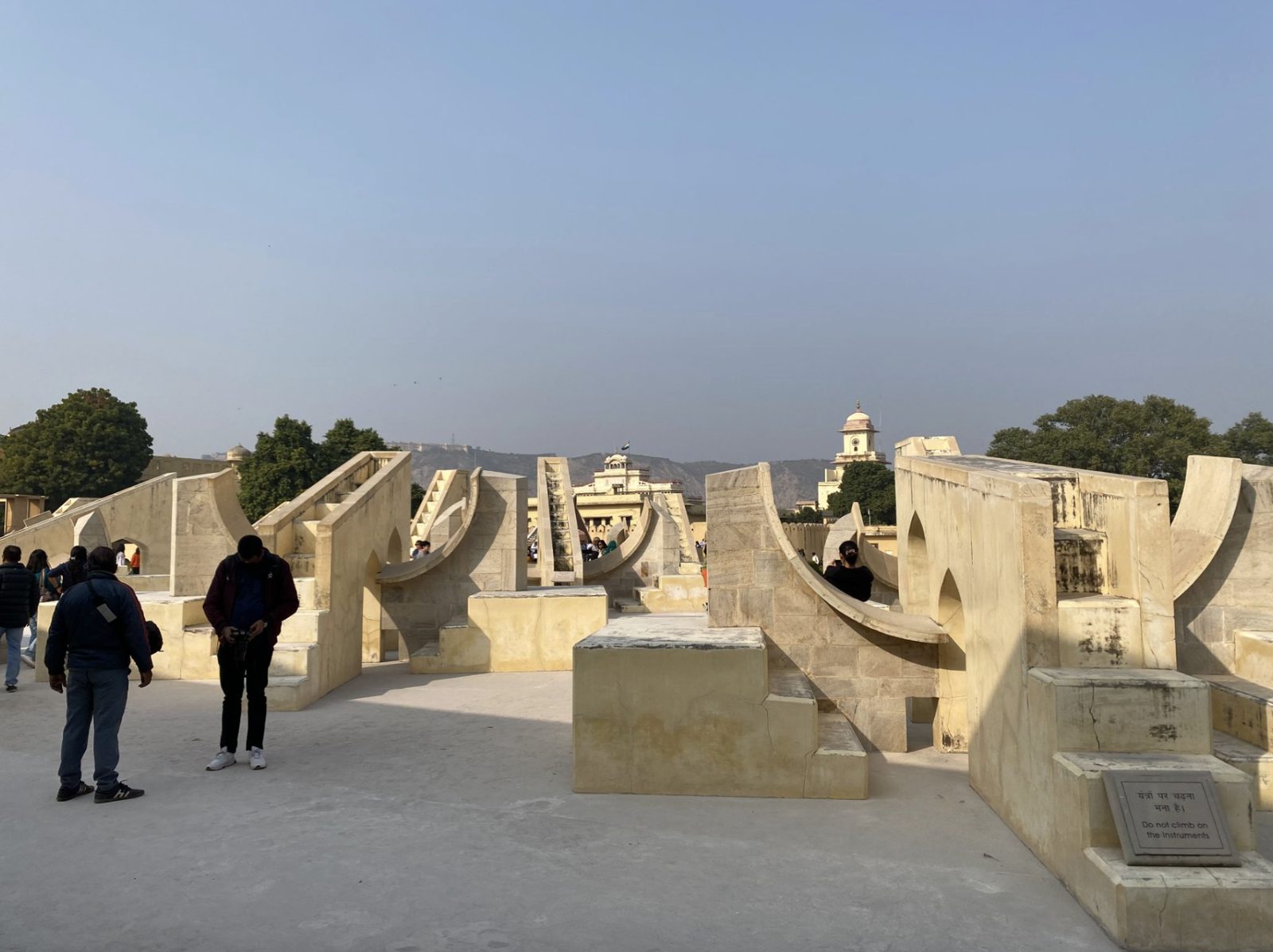 Jantar Mantar, Jaipur
The First Thing I Noticed: Scale
The first structure that caught my attention was the massive triangular ramp rising into the sky. This is the Samrat Yantra, the largest sundial in the world! Standing next to it made me feel small in the best way possible.
A sundial works by using a shadow to tell time. As the Sun moves across the sky, the shadow shifts in a predictable direction. What makes the Samrat Yantra special is its size. Because it is so tall, the shadow moves slowly and precisely, allowing time to be measured down to seconds.
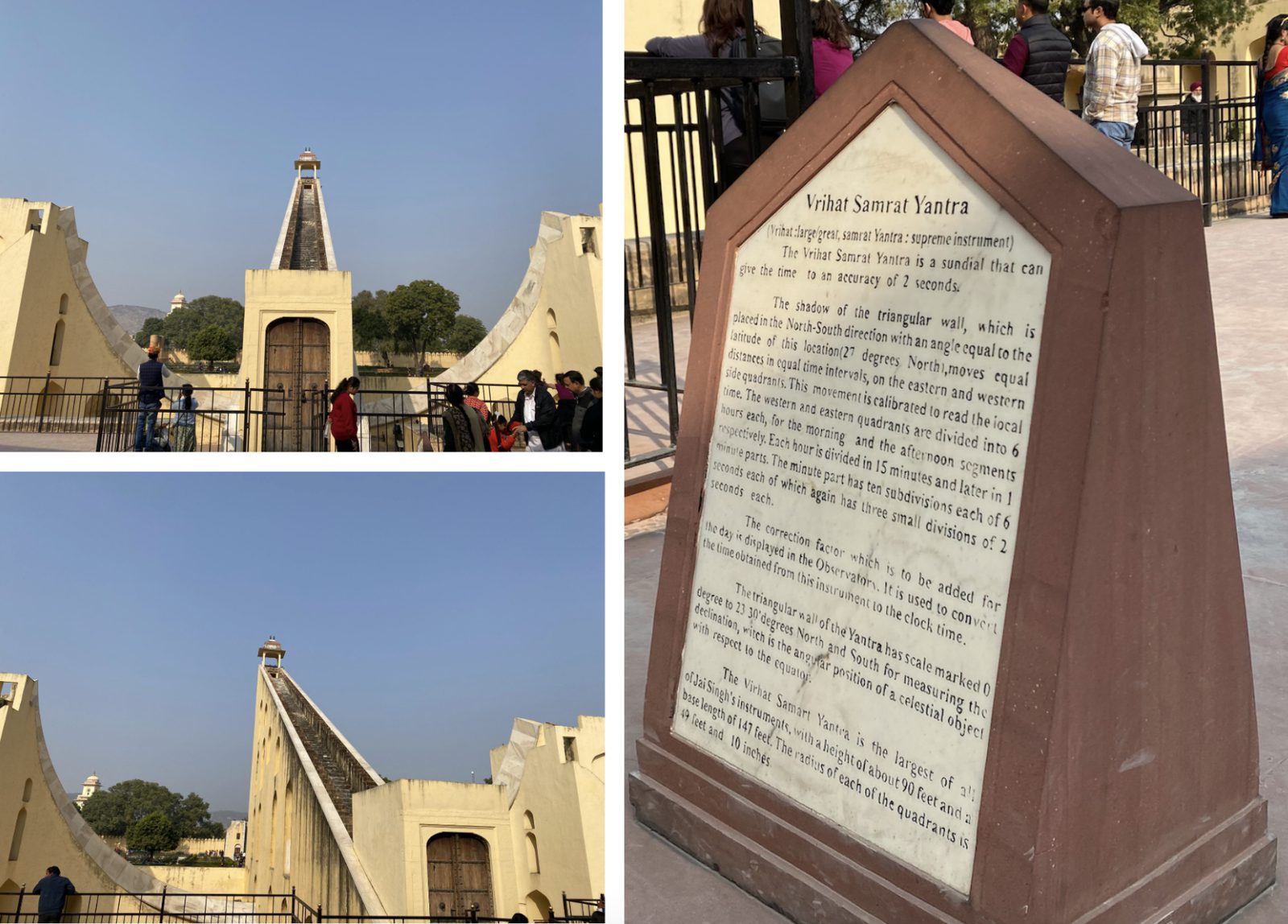 The Samrat Yantra ramp and surrounding structures
As I walked further in, I noticed how the observatory does not rely on small instruments. Instead, the buildings themselves are the instruments. Curved walls act like measuring arcs. Staircases double as calibrated scales. Open windows frame specific parts of the sky. Nothing here was decorative. Everything has a function.
Standing Inside a Measurement
One of the most fascinating instruments I saw was a circular structure you can actually walk into. This is part of the Jaya Prakash Yantra. It looks like a ring with tall walls and rectangular openings that let sunlight and sky pass through.
This instrument maps the sky onto stone. Positions of stars and planets can be marked based on where their shadows or alignments fall inside the bowl-shaped structure. Instead of pointing a telescope outward, you step inside the coordinate system itself.
It felt strange and amazing to stand where astronomical calculations were once made using only geometry and sunlight.
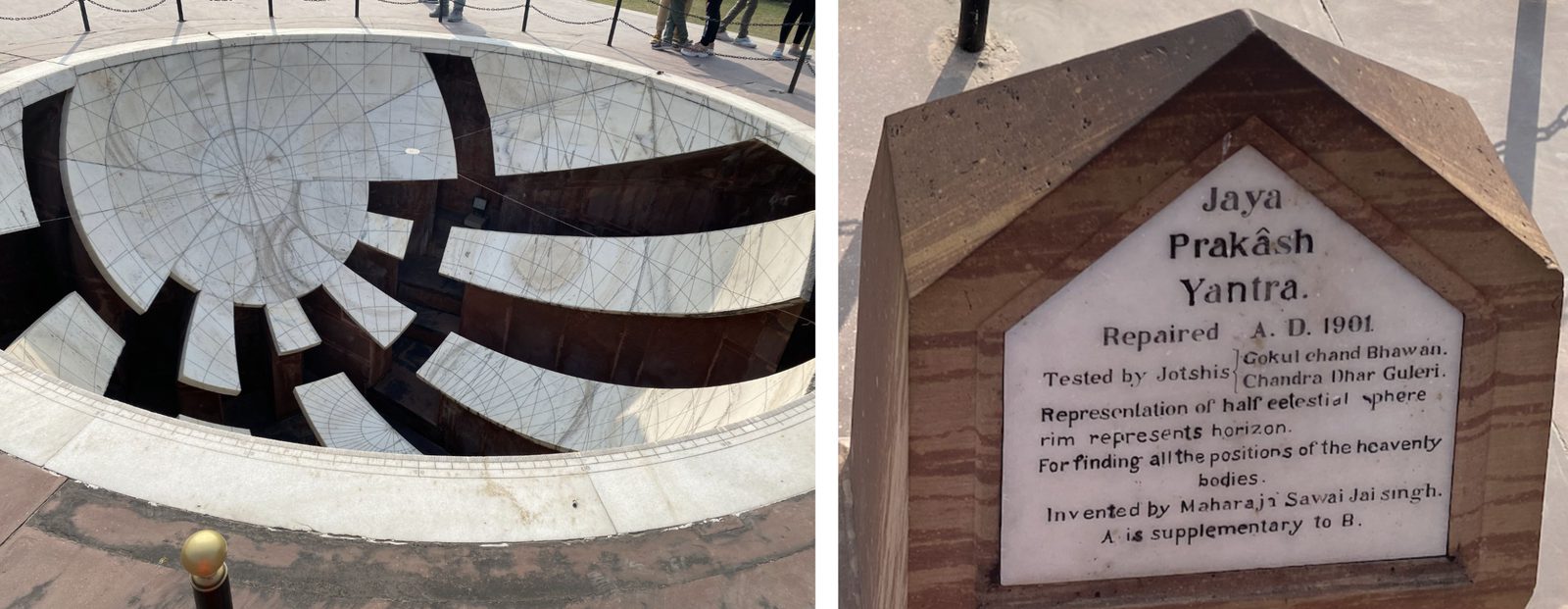 The Jaya Prakash Yantra’s circular structure
Reading the Sky Like a Compass
One plaque stopped me for a while. It explained an instrument called the Digamsa, which is used to measure azimuth.
Azimuth is a word that sounds complicated, but the idea is simple. It tells you the direction of an object in the sky along the horizon. North is zero degrees. East is ninety degrees. South is one hundred eighty degrees. West is two hundred seventy degrees.
By aligning shadows or strings with markings on a circular scale, astronomers could determine where a celestial object was located horizontally in the sky.
Seeing this explanation carved into stone made the math feel approachable and physical.
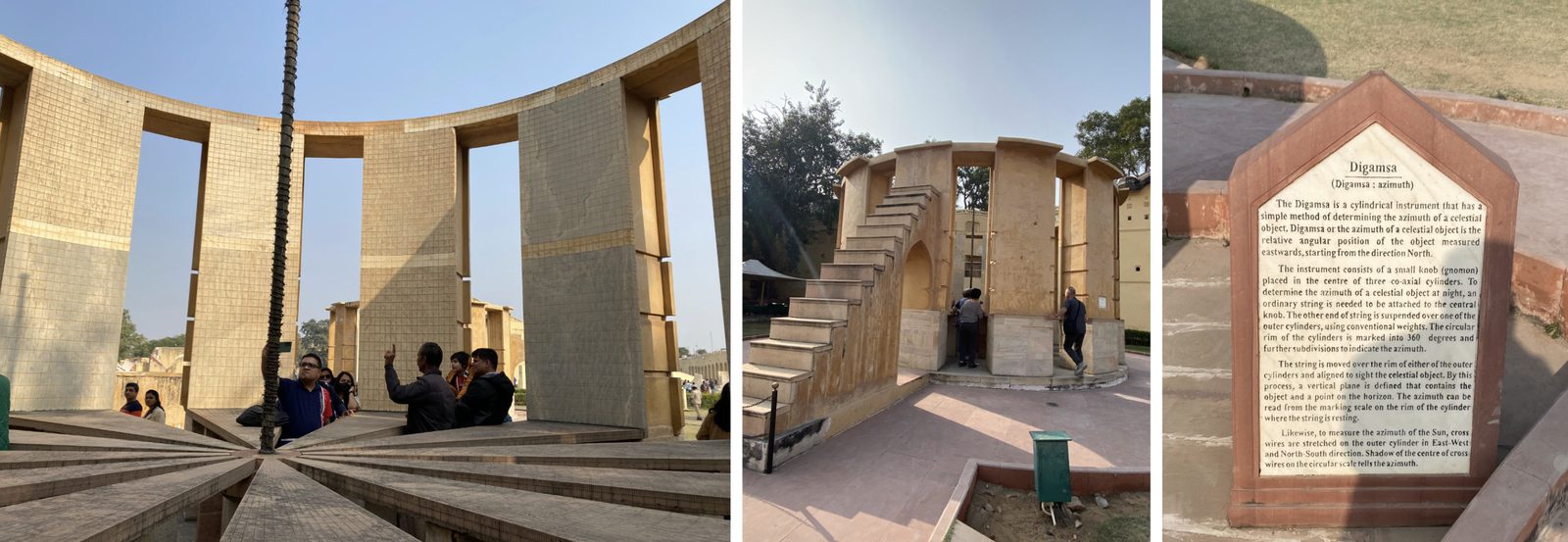 Digamsa Yantra
Light, Shadow, and Silence
What surprised me most was how quiet the place felt, even with so many visitors. People naturally slowed down. Some pointed at shadows. Others traced lines with their fingers. A few just stood still, looking up through the openings toward the sky.
Sunlight moved across tiled surfaces, creating sharp lines that slowly shifted as the minutes passed. The observatory was working the entire time, whether people noticed it or not.
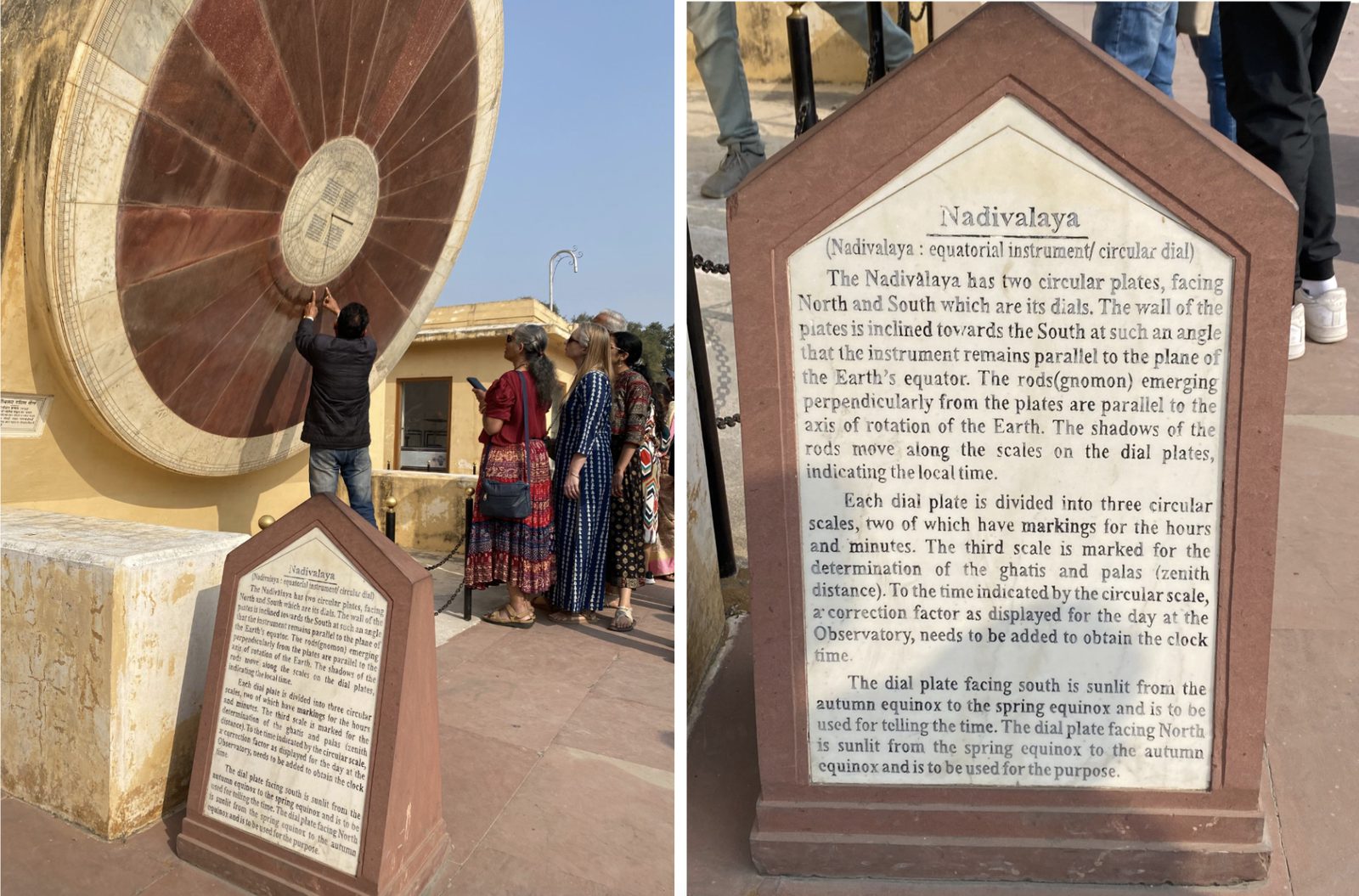 The Nadivalaya
When Astronomy Was Built by Hand
One of my favorite moments was standing near the center of another circular instrument, where long stone slabs radiate outward like spokes. A vertical pillar rises from the middle, casting shadows across the surface.
This setup helps track the Sun’s position throughout the day. The shadow’s direction and length change as Earth rotates. By marking those changes, astronomers could understand time, seasons, and the motion of the sky.
There weren’t any screens or electricity. Only stone, sunlight, and careful design.
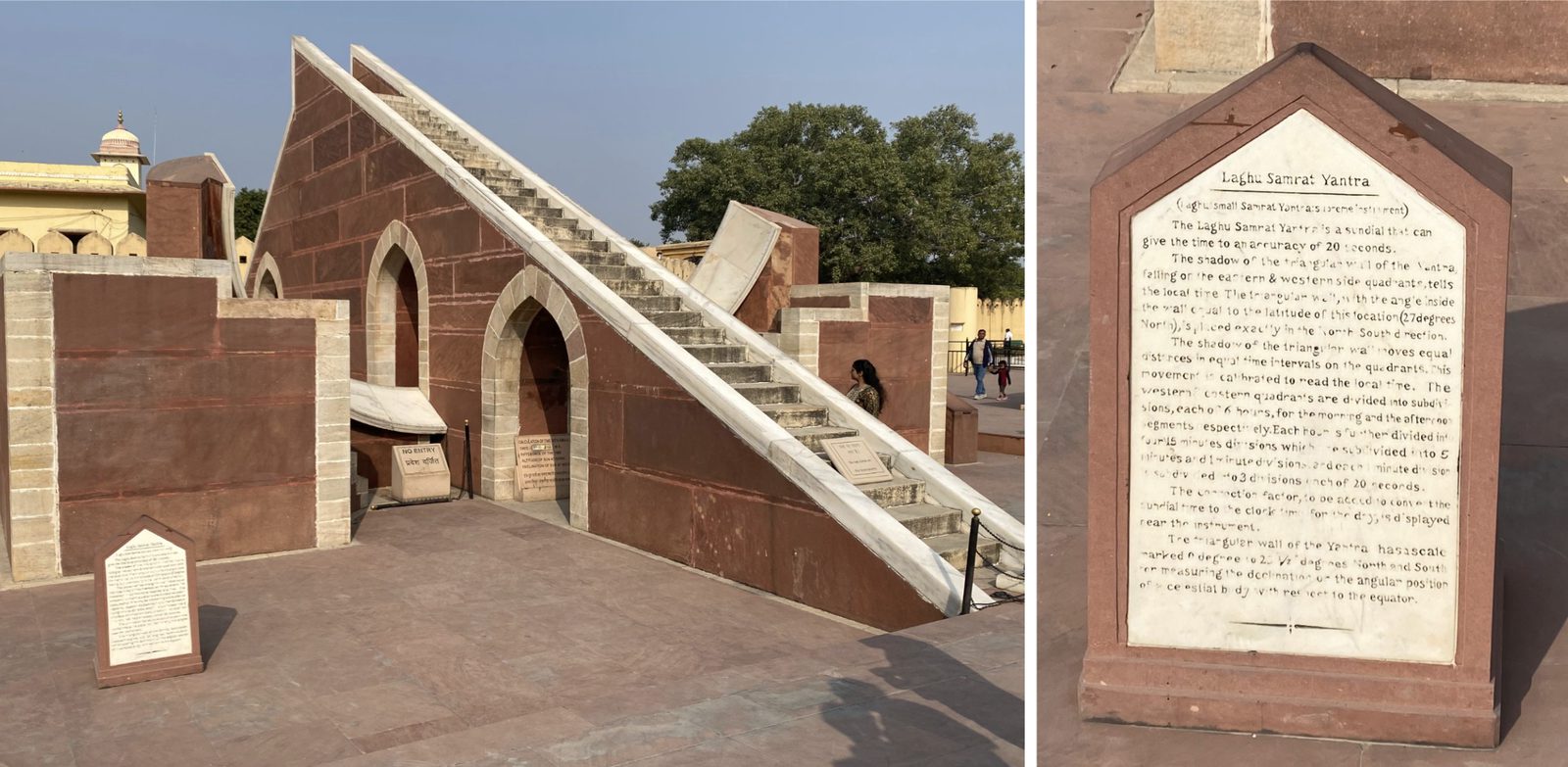 Laghu Samrat Yantra
Looking Through the Sky
Some structures felt like windows carved into walls, perfectly framing the blue sky. When I lined myself up with them, I realized they were not random openings. They were aligned to specific angles and directions.
These openings allowed astronomers to observe when certain stars or the Sun crossed specific positions. It felt like the building itself was watching the sky.
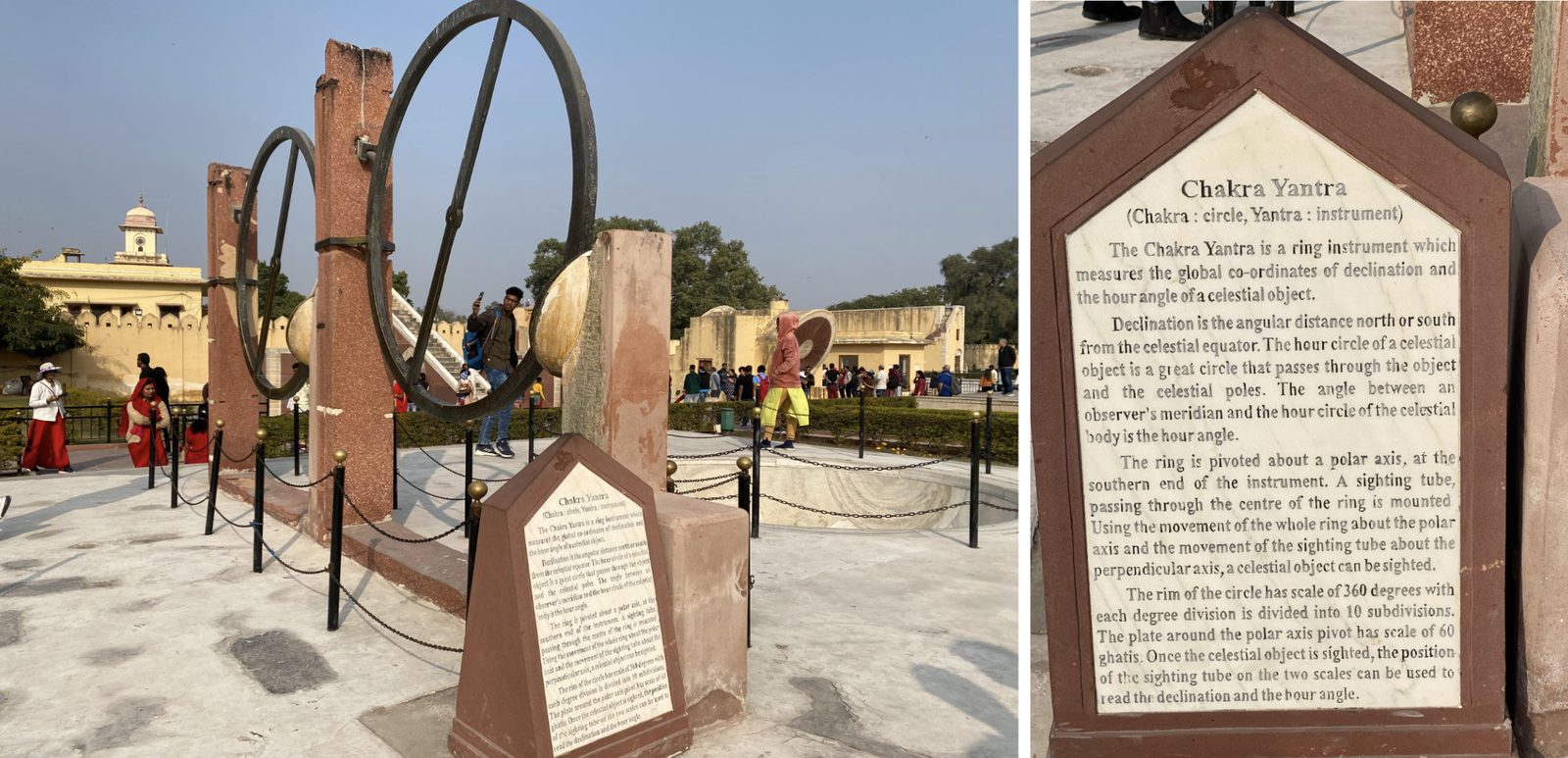 Chakra Yantra
What Stayed With Me
Jantar Mantar changed how I think about observation. Modern astronomy often feels distant, mediated by screens and data. This place reminded me that astronomy began with careful looking, patience, and an understanding of patterns.
Walking through the observatory made me realize that knowledge does not always come from complexity. Sometimes it comes from clarity, scale, and trusting the sky to tell its story through light and shadow.
I left feeling grounded and inspired. The sky felt closer than it ever had before.
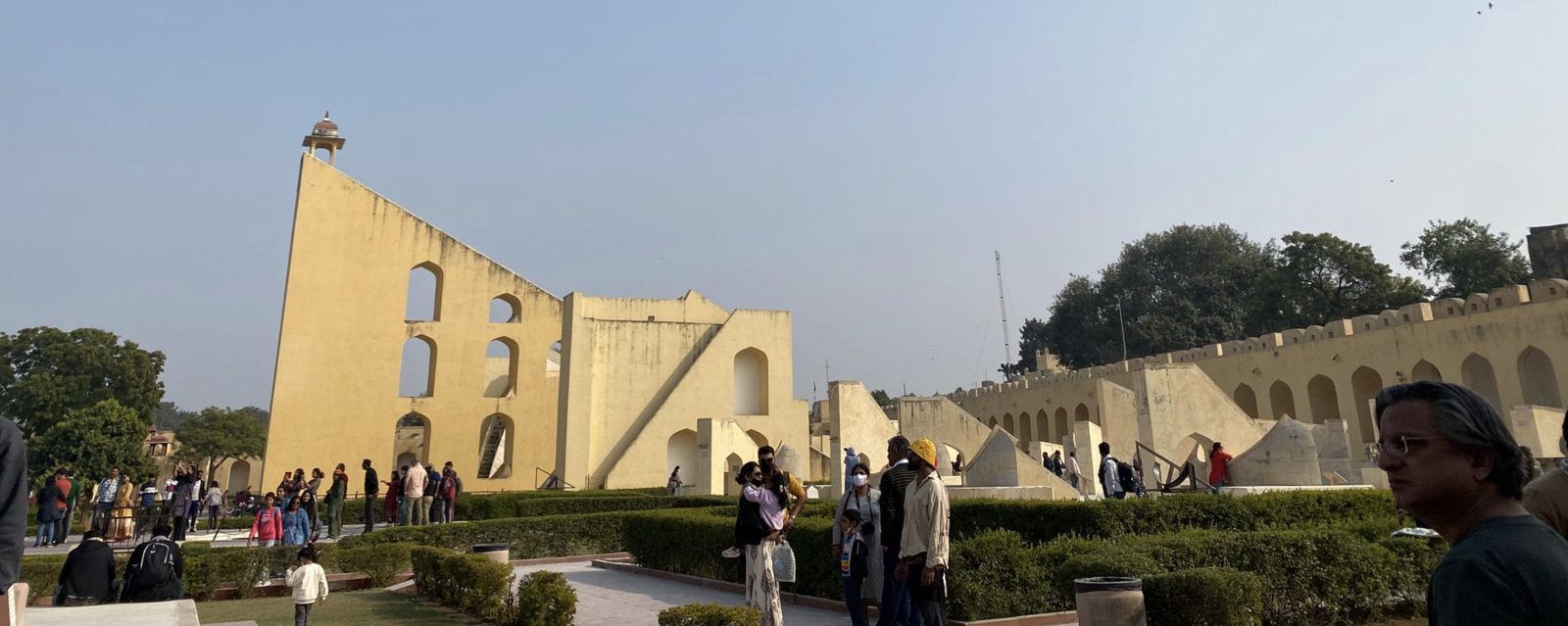 Jantar Mantar, Jaipur